Invasive species
Eurasian Watermilfoil Is Now Confirmed in Gull Lake: What Associations Can Do
Last reviewed: October 24, 2026. Grant dates and amounts change; check the linked DNR pages before you apply.
If you spend time on Gull Lake, you may have heard the news. The Minnesota DNR’s List of Infested Waters, in the version dated October 21, 2026, now shows Eurasian watermilfoil in Gull Lake (DNR lake ID 11-0305, listed under Cass County). The listing and the first confirmation are both from 2026. Gull was already on the list for zebra mussels, which were listed and confirmed in 2010.
A listing is a starting point, not a verdict. Here’s a plain look at what Gull Lake Eurasian watermilfoil means and what lake associations across the Brainerd lakes area can do about it.
What Eurasian watermilfoil is
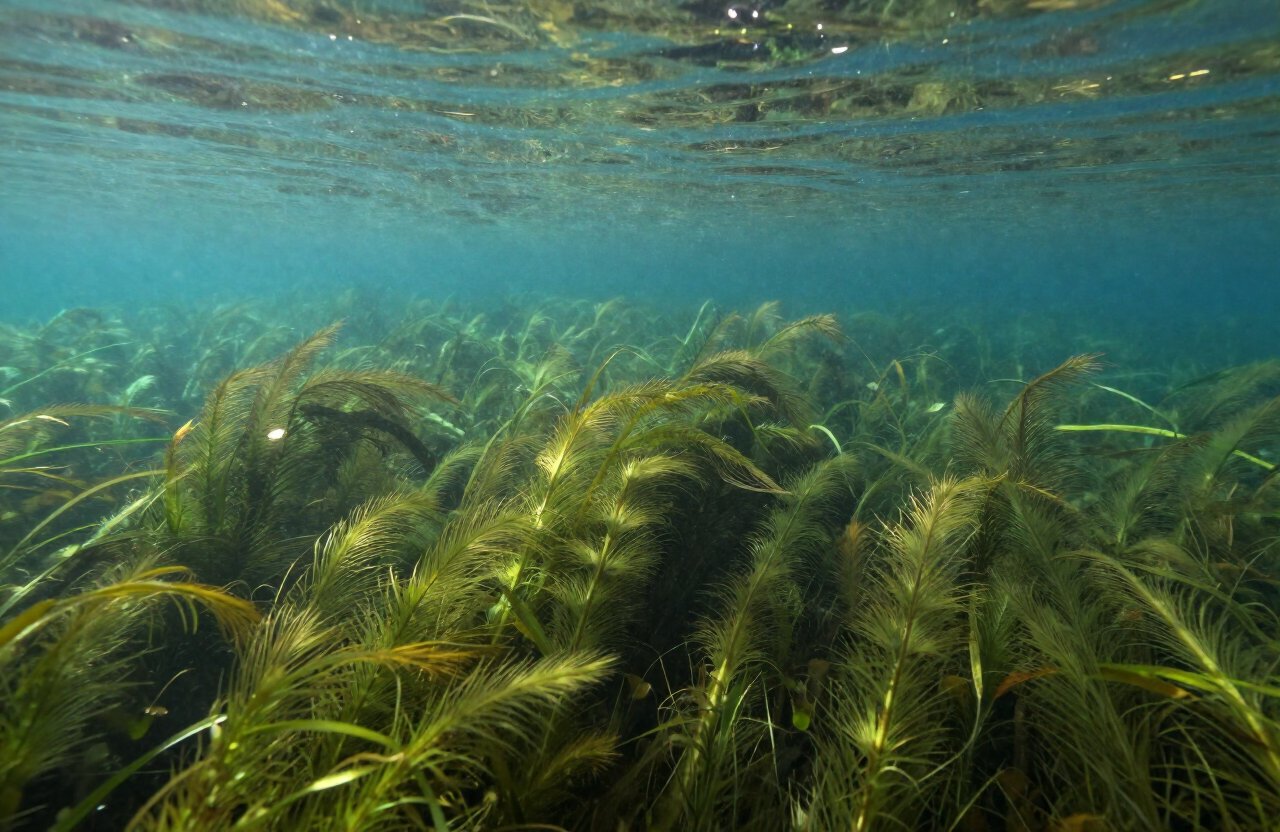
Eurasian watermilfoil is a rooted, submerged plant native to Europe and Asia. According to the DNR, it was first recorded in Minnesota in Lake Minnetonka (Hennepin County) in 1987.
A few things to know:
- It spreads mostly by fragments. The DNR notes that a single fragment can break off, settle, root and start a new population.
- It grows toward the surface. It can grow up to 20 feet tall but typically grows three to nine feet, forming dense mats at the surface that get in the way of swimming, boating and fishing.
- It crowds out native plants. It can outcompete the native plants that fish and wildlife depend on, lowering plant diversity.
- It has look-alikes. Native northern watermilfoil looks similar. The DNR says Eurasian watermilfoil has 12 to 21 leaflet pairs per leaf, while northern has five to nine, and the two often hybridize. Get a positive ID before pulling or treating anything.
Eurasian watermilfoil and its hybrids are prohibited invasive species in Minnesota. It is a misdemeanor to possess, transport or introduce them except under a DNR permit for disposal, control, research or education.
What a listing means for your lake
Clean, Drain, Dispose and Dry rules apply on every lake, listed or not. What changes is that your association now has a public record, and a reason, to plan for monitoring and possibly management.
It also matters for neighbors. The DNR list shows several waters connected to Gull, including Upper Gull, Margaret, Bass (Ray), Spider, Green’s, Roy and Nisswa, that are listed for zebra mussels because of that connection. Associations on connected lakes should keep a close eye on their own shorelines and accesses.
Practical steps for associations
- Talk to your DNR invasive species specialist. The DNR asks that new occurrences be reported to a regional invasive species specialist or through EDDMapS. Herbicide treatment or mechanical removal in public waters requires a DNR permit, so this conversation comes first.
- Map it before you act. Good management starts with a delineation survey showing where the plant is and how dense it is. Under the DNR’s 2026 grant rules, a third party must do the pre-treatment delineation, and a post-treatment survey is now required as well.
- Watch the DNR treatment grant. The DNR’s Invasive Aquatic Plant Management (IAPM) grants reimburse local groups, including lake associations, for permitted management of Eurasian watermilfoil and a few other invasive plants. The Crow Wing County Lakes and Rivers Alliance (LARA) reports, citing a DNR email on its homepage, that the round for 2027 work opens Monday, November 9, 2026 at 9 a.m. and closes Wednesday, December 9, 2026 at 4:30 p.m. As of October 24, the DNR’s own grant page has not posted these dates, so confirm there before you apply. Small-scale awards are a random draw. For those, a complete, on-time application is what matters. Population-scale Eurasian watermilfoil awards, meant for lake-wide projects, are scored on written essays. Under the 2026 rules, small-scale grants ran $5,000 to $15,000 and population-scale grants $25,000 to $49,999, and each lake could win only one Eurasian watermilfoil grant.
-
Lean on your county AIS program. Both counties use state AIS prevention aid, and Minnesota law lets counties pass some of it to lake associations (Minn. Stat. 477A.19). Budgets are tightening: the statewide total drops from $10 million to $5 million a year starting with aid paid in 2027.
- Cass County offers cost-shares through the Cass Soil and Water Conservation District for AIS education, prevention, research and management. Every project must be approved by the SWCD board before you spend anything. Check the current county plan for funding limits.
- Crow Wing County’s 2026 AIS Prevention Plan budgets $68,470 in grant funding for lakes, including Eurasian watermilfoil treatments. The county “highly encourages” lake associations to apply, and staff are available to help. Confirm 2027 amounts with the county before you budget.
- Support inspections at the access. Fragments travel on boats, and Cass County lake groups have funded extra inspection hours through donations.
- Tell your members, calmly and clearly. A short newsletter note covering what was found, what the association is doing, and how to clean, drain and dry equipment goes a long way. Ask members to report suspicious plants to the DNR or through EDDMapS rather than pulling them on their own.
The bottom line
Eurasian watermilfoil is a manageable problem when associations stay organized: confirm it, map it, line up permits and funding, and keep members informed. It takes paperwork and follow-through more than panic.
How Lake Association Office can help
Lake Association Office takes paperwork off volunteer boards. If your association decides to apply for an IAPM grant or a county cost-share, we draft the application for a flat fee of $750 to $1,500, and your board reviews, signs and submits it. Grant money goes straight to your association; we never handle your money. If a grant we write would also pay for our services, we’ll tell you plainly up front.
Want a clear starting point? Request a Free Lake Snapshot for your lake. It is a one-page summary of public MPCA and DNR data on water clarity, invasive species and trends where data allows. No commitment.
Sources
- MN DNR, Infested Waters List (spreadsheet, dated Oct. 21, 2026)
- MN DNR, Eurasian watermilfoil
- MN DNR, Invasive Species Specialist contacts
- MN DNR, Invasive Aquatic Plant Management Grant Program and 2026 Request for Proposals (PDF)
- DNR email on the 2027 IAPM round, as posted on the Crow Wing County Lakes and Rivers Alliance homepage
- Minn. Stat. 477A.19, Aquatic invasive species prevention aid
- Cass County AIS, Funding & Reports and 2024 AIS Prevention & Management Plan
- Crow Wing County, 2026 AIS Prevention Plan